

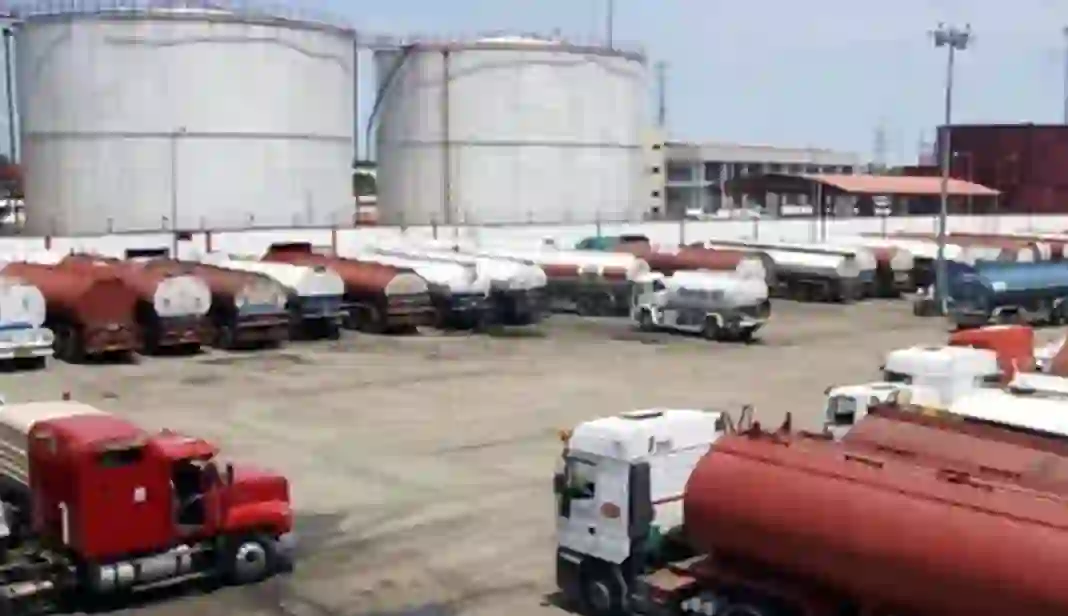

More facts have emerged why President Bola Ahmed Tinubu suspended the 15 percent import duty on petrol and diesel. Contrary to reports that the policy has been canceled, the date of implementation was only shifted to the First Quarter of 2026, the magazine has learnt from competent sources in the Presidency who are knowledgeable enough on the issue.

The policy was supposed to take effect on October 21, 2025 but was postponed in a letter by the Nigerian Midstream and Downstream Petroleum Regulatory Authority, NMDPRA saying the federal government was taking another look at the policy, and has decided to suspend it until early next year.
According to The Punch, the president decided to suspend the policy based on advise by the Executive Chairman of the FIRS, Dr Zacch adedeji, who in a letter to the president, said the policy could disrupt fuel supply in the country.
The FIRS chairman said in the letter that the refineries in the country could not provide the nation’s fuel requirements at the moment, that it’s important to give them more time to be able provide the energy security that the country required, saying fuel importation can complement whatever the local refineries are producing.
Adedeji said in the letter that the deferment made both economic and social sense in line with the president’s directive that government policies must be in the interest of Nigerians.
In the letter issued by the NMDPRA, the agency said the suspension was necessary to allow for more consultations with stakeholders, saying the policy was conceived to protect local refineries in the country.
NMDPRA: “The purpose of this memorandum is to apprise Your Excellency of the need for a deferment in the commencement schedule of the implementation of the previously approved fifteen per cent (15 per cent) import on Premium Motor Spirit and Diesel, sequel to additional strategic consultations on implementation readiness.
“Your Excellency may wish to recall that on 21st October 2025, via presidential PRES8197/HAGF/100/71/FIRS/40/88-2/NMDPRA/2, you graciously approved the introduction of fifteen per cent (15 per cent) ad-valorem import duty on Premium Motor Spirit (PMS and Diesel). The measure was conceived as a corrective policy tool to strengthen local refining capacity, stabilise downstream market prices, and promote competitive parity between imported and domestically produced fuels in line with the Renewed Hope Agenda for energy and fiscal sustainability.
“Pursuant to the above approval, and in line with Your Excellency’s directive that all fiscal and market interventions must be reflective of the administration’s drive for efficiency and balance, a series of consultative meetings was held with critical stakeholders to review implementation timelines and operational readiness.
“Sequel to these engagements, and following a thorough assessment of market conditions and the agreed strategic implementation roadmap, it was collectively determined that it is necessary to allow for a smoother and more efficient rollout. This adjustment will provide adequate time for stakeholders to complete alignment on technical templates, public communication frameworks, and import scheduling, thereby minimising disruption to the supply chain and ensuring that the reform achieves its intended stabilising Impact.”
Meanwhile, the Ogun State Chamber of Commerce, Industry, Mines and Agriculture, OGUNCCIMA has faulted the Federal Government’s decision to suspend the implementation of the policy, citing its effect on the nation’s quest for energy independence.
OGUNCCIMA’s President, Lion Niyi Oshiyemi, described the suspension as a setback to Nigeria’s economic reform drive and a missed opportunity to protect local refiners, particularly the Dangote Refinery and other modular refining initiatives.
According to him, “The suspension of the 15 percent fuel import tariff is disappointing. The policy was a step in the right direction to promote local refining, reduce dependence on imports, conserve foreign exchange, and create a fair competitive environment for domestic producers.”
Instructively, the suspension, according to industry players did not go down well with investors like Africa’s Richest Man and President of Dangote, the owner of the $20 billion Petrochemical Refinery in Lagos, and others who have been lobbying the federal government to discourage fuel importation into the country.
Sources in Dangote who spoke with the Magazine said the management consider the federal government’s decision as a setback for the company, despite its assurance that it’s capable of meeting the country’s fuel needs. “We will continue to do our business hoping that the government will make policies to protect local investors,’ a source said.
This is more so because of the belief in the sector that the federal government may have bowed to pressure from fuel import merchants, who are not prepared to end the business despite the country quest to end the malaise.
Discover more from The Source
Subscribe to get the latest posts sent to your email.